Build a connected foundation for the way your business works.
As a business grows, its processes often spread across spreadsheets, messages and disconnected applications. Information is entered more than once, teams lose visibility and customers depend on manual updates. The right software brings those activities into a workflow that people can understand and use consistently.
Illustrative screens from demo data, composed with AI.
What we make.
UnboxedAI develops custom platforms around the roles, decisions and information that drive your operations. We connect product design with engineering so the application reflects the work it needs to support. An internal portal, customer-facing platform or specialist marketplace begins with the same question: what should the system help people do better?
Operational systems and CRMs.
Manage client relationships, cases, projects, tasks, bookings and business records through connected workflows. Define stages, responsibilities and reporting around your process rather than forcing the process into a generic template.
Customer and partner portals.
Give external users a clear view of the information and actions relevant to them. Document access, communication, updates and service requests can be organized around agreed roles and permissions.
Web, mobile and marketplace development.
Create responsive applications, mobile experiences and specialist commerce platforms. Plan catalogue listings, auctions, user journeys and administrative controls around the intended use.
Integration and modernization.
Connect selected data sources and existing systems through agreed APIs or import workflows. Introduce changes in manageable stages with a defined approach to data migration and acceptance.
SaaS products and connected platforms.
Develop commercial software products, multi-tenant applications, connected-device interfaces and specialist platforms around the client brief. Define the user model, integration requirements and operating architecture for the intended product.
Application modernization and operations.
Extend existing software, connect legacy workflows and plan staged migration. Hosting, application updates, monitoring and performance improvements can be included within an agreed operating scope.
Legacy systems, modernization and ongoing engineering
Modernize what matters. Preserve the workflows that work.
Existing software often carries valuable business rules alongside aging interfaces, disconnected data and maintenance challenges. We assess the application, its users and its dependencies before defining an upgrade path. The work may connect new APIs, improve a module, migrate data, refresh an interface or replace a component in stages.
Integrated scope within custom software and platforms
Application and codebase assessment.
Review architecture, business rules, dependencies, integrations and maintenance needs.
Legacy application support.
Assess existing PHP, .NET, JavaScript, database-driven or other inherited systems and define the work required. Specialist technology coverage is confirmed from the actual codebase.
API enablement and system integration.
Connect existing applications to portals, mobile interfaces, reporting and selected AI workflows.
Database and data migration.
Map records, reconcile data, validate transfers and define rollback or recovery arrangements.
Application modernization.
Upgrade frameworks and dependencies, refresh user interfaces, introduce automated checks and improve deployment practices.
Incremental replatforming.
Move suitable components to a new runtime or hosting environment while managing continuity, cutover and support.
Ongoing application care.
Maintenance, defect resolution, performance work and agreed operational support.
Related current services: AI, data and automation for information workflows; Private AI and infrastructure for deployment; Websites and digital experiences for interface renewal.
What you get.
A connected application can improve visibility, reduce repeated administrative work and create a consistent experience for staff and customers. Success measures are agreed around the workflow, such as time to complete a task, record completeness or the steps needed to serve a customer.
Typical deliverables include workflow definitions, interface designs, the scoped application, agreed integrations, acceptance testing and handover documentation.
Hosting, source ownership, licensing and support are defined in the proposal.
Relevant work.
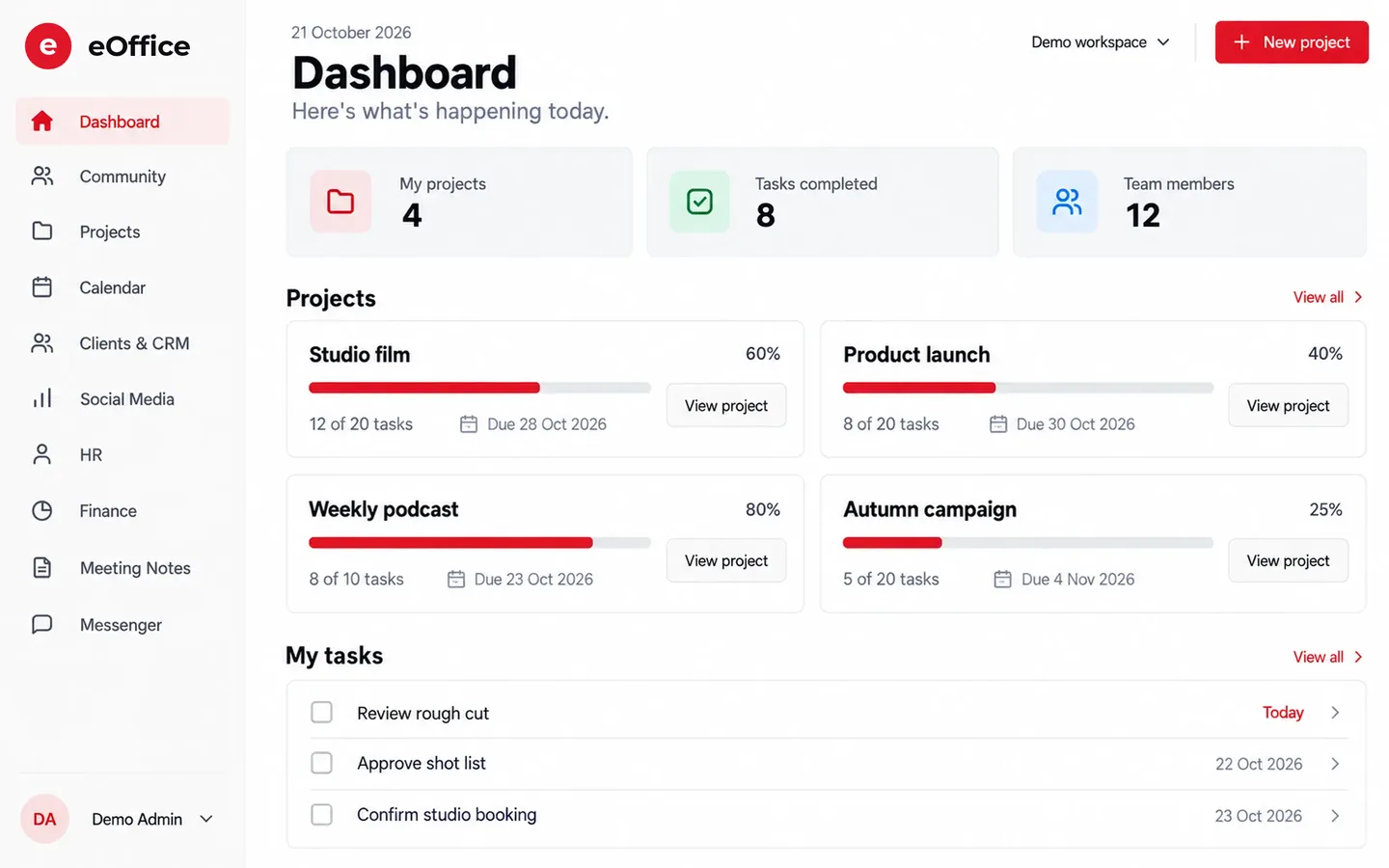
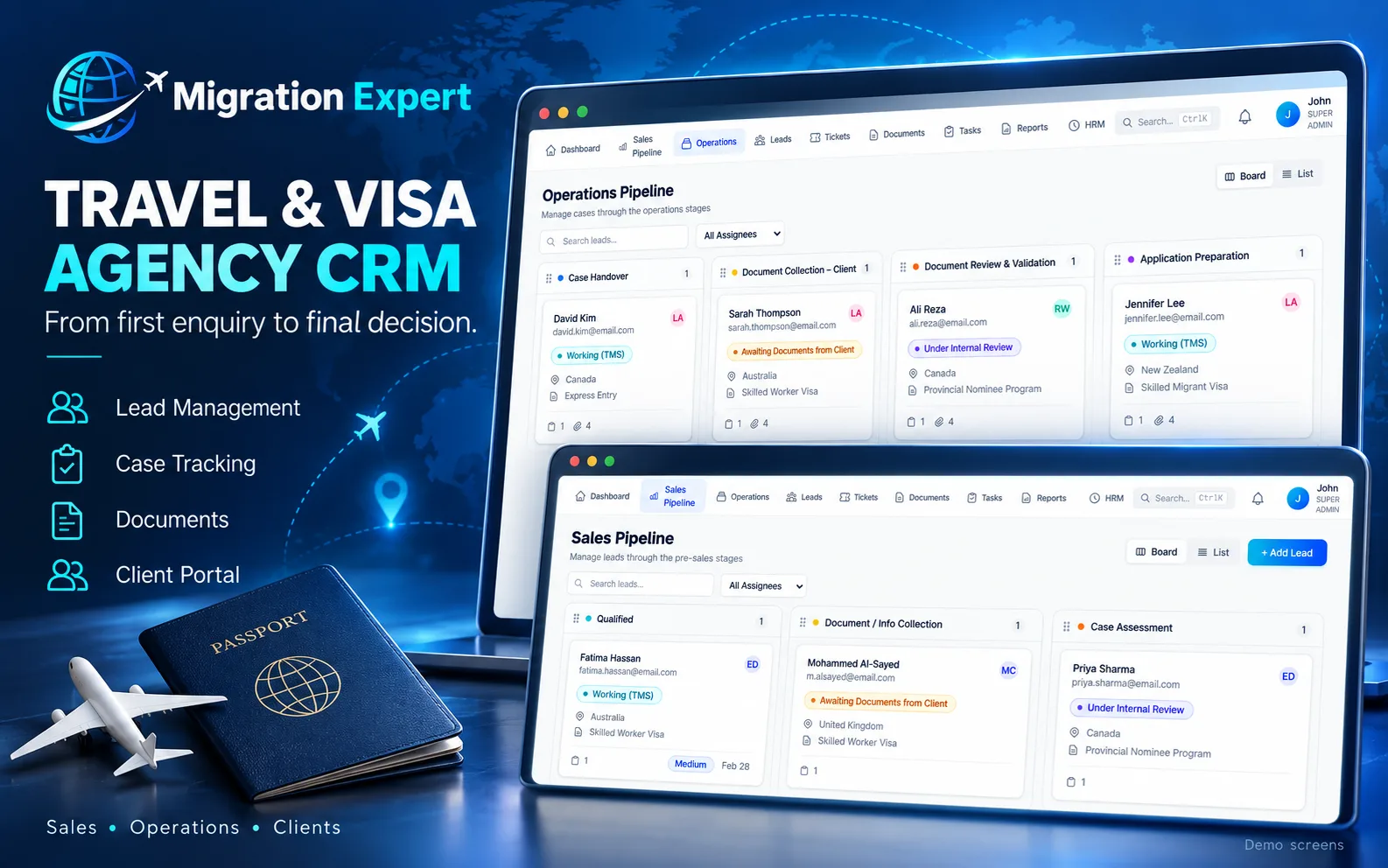
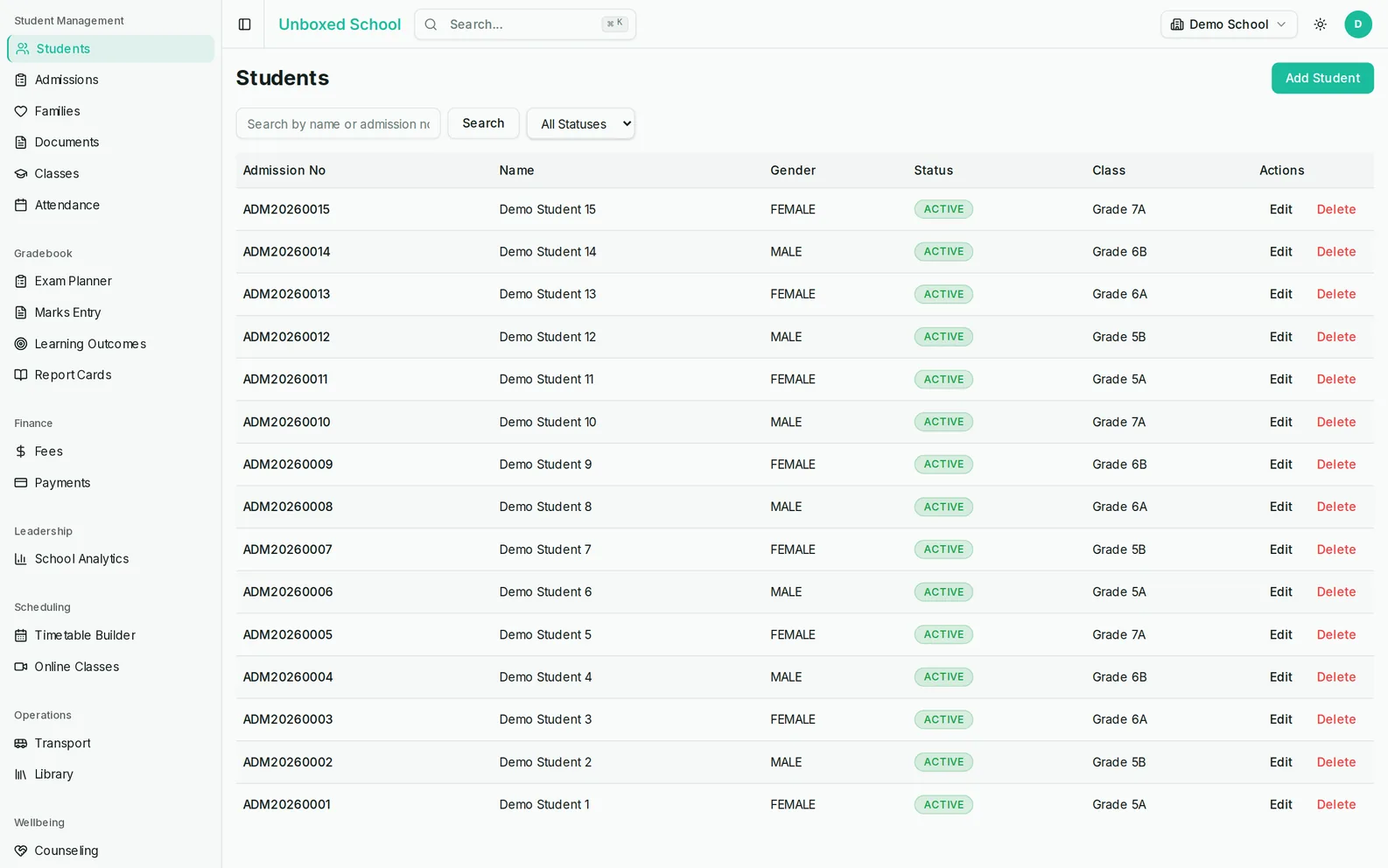
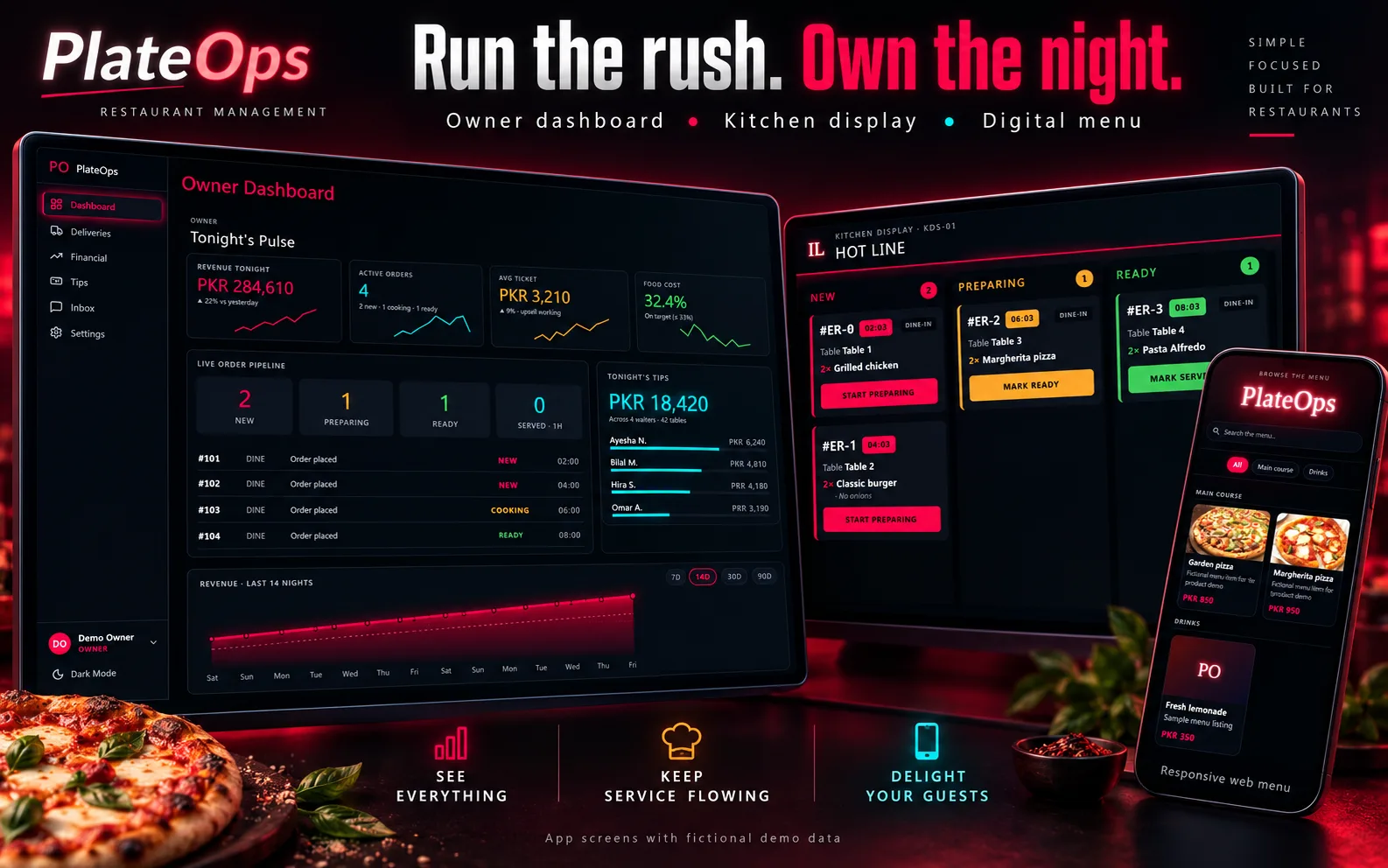
Migration Expert, eOffice, Unboxed School System and PlateOps illustrate delivered systems for different operational needs. Their client-project status remains visible.
Migration Expertdelivered
Visa and immigration CRM with sales and case pipelines and a client portal.
eOfficedelivered
Office portal for projects, CRM, HR, finance and social content. 1,013 commits.
Unboxed School Systemdelivered
Student records, admissions and attendance for multi-branch schools.
PlateOpsdelivered
Restaurant owner dashboard, kitchen display and digital menu in one.
Illustrative screens from demo data, composed with AI.
How we work
Discovery sprint
Clarify the problem, assess requirements and define a practical scope before committing to the full build.
1-2 weeks
Fixed-price project
Deliver an agreed application, website, film or visualization package against defined deliverables and review stages.
Set in the quote
Support and care
Maintain the agreed system or website through defined hosting, updates and ongoing change support.
Monthly
Tools and technologies relevant to your project.
AI creates value when the model, workflow and delivery method fit the business need. Our service approach brings together AI-assisted development, language and multimodal models, voice technology, generative production and private deployment options. The technology selection is guided by the task, available data, integration requirements and quality expected from the result.
OpenAI
Claude
Google Gemini
LangChain
n8n
Node.js
The ecosystem below identifies relevant technologies for project selection and integration. It is not a declaration that every listed platform is currently deployed by UnboxedAI. Final choices are defined within each engagement. Logos identify technologies only and remain the property of their owners. No partnership, certification or endorsement is implied.
See the full list
AI-assisted software and digital product development
ChatGPT AI workspace
Supports research, requirements exploration, content drafting and structured problem-solving. Relevant to discovery, product planning and content workflows; outputs receive human review.
Codex Software engineering agent
Supports code implementation, debugging, refactoring and test work. Relevant to custom software, web applications and technical maintenance, with engineering review before release.
Claude and Claude Code Model family and coding tool
Claude supports language, reasoning and document tasks. Claude Code supports repository-based development workflows. Relevant to applications, knowledge tools and AI-assisted engineering.
GitHub Copilot Developer assistant
Supports coding and developer workflows alongside the team’s tools. A candidate for implementation assistance, code explanation and maintenance.
Google Gemini Multimodal model family
Supports tasks spanning language and other supported input types. Relevant to information extraction, assistants, content analysis and connected applications.
Help structure model calls, tools, retrieval and agent workflows. Relevant when a solution requires controlled multi-step behavior and connections to business systems.
n8n Workflow automation platform
Connects applications, events and AI steps. Relevant to lead handling, document routing, reporting and operational workflows with defined review and exception handling.
Development stack: languages, frontend and backend
Node.js JavaScript runtime
For backend services, APIs, webhooks, real-time features and integration workers. Pair with TypeScript and frameworks such as Express or NestJS according to the architecture.
TypeScript / JavaScript Programming languages
For web interfaces, application logic and integrations across frontend and Node.js services. TypeScript adds type checking to support maintainable code.
React / Next.js User-interface library and application framework
For business portals, dashboards, customer interfaces and web applications. Choose rendering and data-loading patterns around the user journey and performance needs.
Python / FastAPI / Django Language and backend frameworks
For AI integration, data processing, automation and backend applications. Framework choice depends on API, administration and application requirements.
C# / .NET Application development ecosystem
For suitable enterprise APIs, business applications and modernization of existing Microsoft-based systems.
PHP / Laravel Language and application framework
For suitable operational systems, web platforms and maintenance or modernization of existing PHP applications.
WordPress / CMS Content-management platform
For maintainable business websites, publishing and selected commerce integrations. Includes content structures and integrations around the editorial workflow.
For mobile experiences where the feature set, device requirements and maintenance plan suit a shared application approach.
Development stack: data, delivery and infrastructure
PostgreSQL / MySQL Relational databases
For structured business records, application data and reporting. Select schemas, migration methods, access patterns and backup arrangements around the system.
MongoDB Document database
An option for suitable document-oriented application data. Select it where the data model and operational needs benefit from that approach.
Redis In-memory data technology
For appropriate caching, session and coordination patterns. Define persistence and recovery requirements for the intended use.
Docker / Kubernetes Container and orchestration technologies
For packaging applications and, where justified, coordinating container deployments. Infrastructure complexity should match the operating needs.
Git / GitHub Actions Version control and delivery automation
For source management and repeatable build, test and deployment workflows with review and release controls.
Cloud, integrations and quality engineering
Relevant hosting options include AWS, Microsoft Azure and Google Cloud, alongside private infrastructure where required. REST APIs, GraphQL where appropriate, webhooks, queues and identity integrations connect applications. Automated testing, dependency maintenance, logging, monitoring and backup planning support ongoing delivery. These technologies complement AI; they are not AI models.
Explore capabilities across our services.
Explore integrated capabilities within our six core services, from brand and launch communication to interactive experiences, digital engineering, voice and simulation.
Develop aviation, medical, industrial and scenario-based simulations for training, analysis and decision support. Combine interactive environments, computational models and visualization around the intended users and objectives.