AI strategy and use case discovery.
Assess a workflow, identify practical opportunities and define the inputs, integrations and success criteria for a pilot. Establish the current baseline before selecting a model or implementation approach.
Services · AI, data and automation
Businesses generate information through documents, transactions, media, conversations and operational systems. Its value depends on whether people can find it, understand it and use it at the right moment. AI becomes more useful when that information has a clear structure and a defined role in the workflow.
UnboxedAI brings applied AI, data integration and workflow development together around specific business tasks. We begin with the process and its inputs, assess what the data can support and scope an implementation that can be evaluated. The aim is useful work: clearer access to information, more consistent reporting and fewer repetitive steps.
Assess a workflow, identify practical opportunities and define the inputs, integrations and success criteria for a pilot. Establish the current baseline before selecting a model or implementation approach.
Develop scoped assistants, summarization and draft-generation workflows using approved information sources. Retrieval-based approaches can be assessed where answers need to connect to a defined document collection.
Turn suitable documents, recordings and broadcasts into searchable information, structured records and reviewable reports. Combine extraction, transcription and human review around the intended use.
Assess data sources, volumes, quality and processing needs. Scope integration, transformation, reporting and analytical workflows that support decision-making and prepare information for AI.
Connect systems and reduce repeated handoffs through defined actions, approvals and notifications. Select conventional automation or AI according to the nature of each step.
Build assistants and search experiences around approved information sources. Connect extraction, classification, retrieval and draft preparation to business workflows with defined permissions and evaluation.
Develop image and video analysis, forecasting, anomaly detection and decision-support workflows. Establish suitable data, evaluation criteria and deployment requirements around the business question.
Data engineering, big data and analytics
Operational data is often spread across applications, documents and disconnected reporting processes. Before it can support dependable analysis or AI, teams need to understand its sources, meaning, quality and access requirements. Data work starts with those foundations rather than the choice of a platform.
UnboxedAI connects data integration, engineering, reporting and analytical development. Engagements can range from a focused dashboard or information workflow to data platforms, streaming pipelines and distributed processing. The architecture follows the volume, frequency, complexity and business purpose of the information.
Identify the source systems, data ownership, quality issues, access constraints and processing needs. Define what information the intended decision or AI workflow actually requires.
Scope extraction, transformation and movement between agreed systems. Specify validation, refresh frequency, failure handling and operational ownership.
Translate operational questions into defined measures, filters and reporting views. Connect the dashboard to the decisions its users need to make and document how each measure is calculated.
Prepare suitable documents and structured information for retrieval or model workflows. Assess permissions, metadata, search quality and refresh processes before adding an assistant.
Assess batch or streaming requirements, storage choices and distributed processing only when the use case and scale justify them. Benchmark representative data before making throughput commitments.
Develop forecasting, anomaly-detection and analytical models that support planning and operational decisions. Define the target outcome, prepare representative data and evaluate model behavior under the intended operating conditions.
The intended result is a clearer and more reusable view of business information: consistent measures, less repeated report preparation and data that can support future application or AI needs. Establish these benefits against a baseline and assess them through the initial scope.
Deliverables can include a source and data-flow map, data definitions, pipelines, analytical views, predictive models, evaluation results and operating documentation. Integration, scale, performance and ongoing ownership are defined for the project rather than tied to a fixed product template.
Create, understand and transform information around your business workflows. We develop generative AI applications for document preparation, enterprise knowledge, content production, image and audio workflows, and personalized digital experiences. The solution connects suitable models with your information, interfaces and review process so the output has a defined purpose and a clear route into everyday work.
Capabilities include retrieval-augmented generation (RAG), enterprise search, document extraction and summarization, multimodal applications, prompt and context design, image and video workflows, and model evaluation. Model adaptation or fine-tuning can be assessed where the task, data and expected benefit justify it.
Relevant technologies: OpenAI model APIs; Claude; Gemini; suitable Llama, Qwen and DeepSeek models; Hugging Face; FLUX and other visual models; ElevenLabs.
Connect AI reasoning with the tools and steps needed to complete a defined task. We design assistants and agent workflows that can retrieve information, plan a sequence, call approved functions and pass work between systems. Applications can support enquiry qualification, document processing, knowledge retrieval, operational coordination and reporting.
Capabilities include tool and API integration, workflow orchestration, retrieval, task routing, state and memory design, human approval steps, exception handling, evaluation and monitoring. Multi-agent coordination can be used when a brief benefits from distinct task roles. Autonomy is scoped to the task, with clear permissions and escalation behavior.
Relevant technologies: LangChain / LangGraph; n8n; supported OpenAI, Claude and Gemini interfaces; ElevenAgents for voice-led interactions; custom Node.js or Python orchestration.
Generative AI produces or transforms outputs; agentic systems coordinate steps and actions. They can be combined in one solution, but each has a different role.
The business value depends on the task. A pilot may assess information retrieval quality, reporting effort, processing time or review cost. Those measures provide a basis for deciding whether the solution should be expanded.
Deliverables can include a use-case brief, data-flow map, focused pilot, evaluation results, integration requirements and operating documentation.
The selected data and AI capabilities are established in discovery.
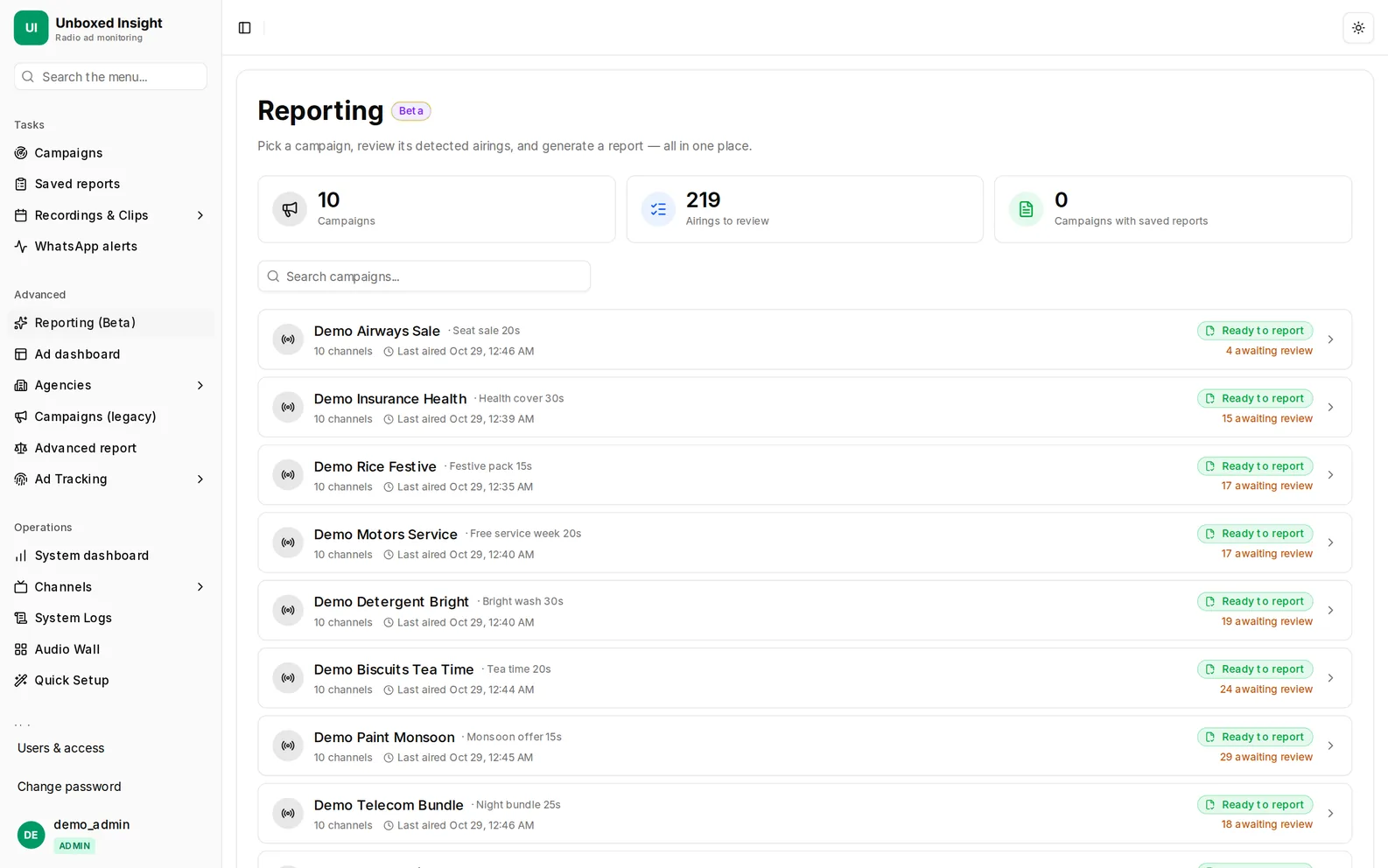
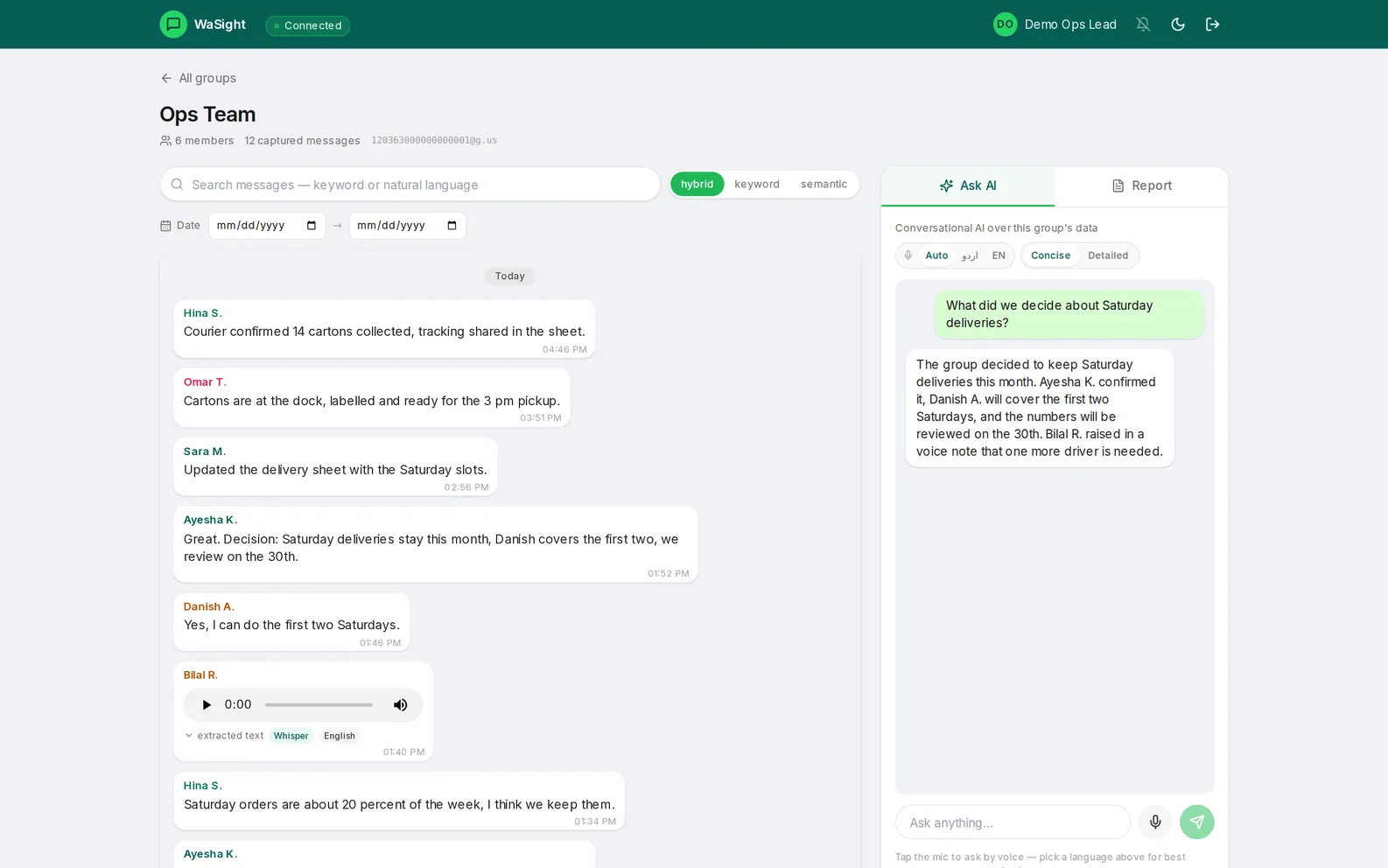
Unboxed Insight provides a relevant example of AI-supported media reporting and candidate detection. Communication prototypes show areas for further validation rather than established production deployments.

Need the AI to stay on known machines? See Private AI.
Illustrative screens from demo data, composed with AI.
Test a focused use case using representative examples and agreed measures for quality, usefulness and operating cost.
4-6 weeksDeliver an agreed application, website, film or visualization package against defined deliverables and review stages.
Set in the quoteMaintain the agreed system or website through defined hosting, updates and ongoing change support.
MonthlyAI creates value when the model, workflow and delivery method fit the business need. Our service approach brings together AI-assisted development, language and multimodal models, voice technology, generative production and private deployment options. The technology selection is guided by the task, available data, integration requirements and quality expected from the result.
The ecosystem below identifies relevant technologies for project selection and integration. It is not a declaration that every listed platform is currently deployed by UnboxedAI. Final choices are defined within each engagement. Logos identify technologies only and remain the property of their owners. No partnership, certification or endorsement is implied.
We define the task and success criteria, compare suitable models and tools, and test representative inputs before selecting an implementation. The assessment covers output quality, integration needs, data handling, hosting, latency and operating cost. Human review, system testing and clear responsibility remain part of delivery.
Explore integrated capabilities within our six core services, from brand and launch communication to interactive experiences, digital engineering, voice and simulation.
Develop a clear identity, practical brand guidance and launch assets that connect the product to its market.
Create browser experiences, playable concepts and interactive product demonstrations around a defined audience and purpose.
Develop product models, CAD geometry and print-ready outputs with agreed references, dimensions and file requirements.
Support communication through voice-over, transcription, subtitles and dubbing. Language coverage and review are established for the brief.
Develop aviation, medical, industrial and scenario-based simulations for training, analysis and decision support. Combine interactive environments, computational models and visualization around the intended users and objectives.
Often yes. Source quality, permissions and structure affect how reliably the workflow can operate.
Scale is assessed from the data volume, update frequency, processing needs and operating requirements. Architecture and capacity are confirmed before a commitment.
Tell us what you want to improve, build, test or launch. We will help identify the requirements and a suitable starting point.
Discuss an AI or data opportunity