Architectural renders and films.
Communicate exteriors, interiors, materials, spaces and surrounding context through still imagery and walkthrough sequences. Agree the intended audience and design stage before production.
Services · Simulation, visualization and digital engineering
Simulation connects the behavior of a system with an environment people can explore. It can help teams practice a procedure, evaluate an operating scenario or understand a complex design. The purpose determines the model, the interaction and the level of fidelity.
UnboxedAI develops bespoke aviation, medical, industrial, architectural and operational simulations alongside computational studies, digital twins and 3D engineering outputs. Software development, visualization, interaction and domain-specific models come together around the client brief. The scope extends across industries rather than being tied to a particular portfolio example.
Communicate exteriors, interiors, materials, spaces and surrounding context through still imagery and walkthrough sequences. Agree the intended audience and design stage before production.
Organize project geometry and related drawing outputs within the agreed scope. Establish source information, revision responsibilities and intended use before treating outputs as technical deliverables.
Explore wind, sunlight, energy, fire, evacuation, structural response or drainage scenarios with stated assumptions. Use findings to identify questions for further design or professional review.
Connect films, tours, plans and selected unit information through a website or presentation. Align the digital experience with the approved design and project communications.
Create procedural training, scenario rehearsal, system familiarization and interactive environments for specialist users. Combine software models, 3D assets, domain input and scenario logic around the intended learning or analytical objective.
Connect digital representations to operational data for monitoring, scenario exploration and decision support. Define the real system, synchronization requirements, model behavior and interface.
Develop geometry, product models and print-ready outputs from agreed source information. Establish dimensional requirements, formats and intended use as part of the engineering brief.
Simulation and immersive environments
Simulation gives people a way to explore systems, practice tasks and evaluate scenarios before acting in the real world. It can support a pilot learning a procedure, a clinical team rehearsing a scenario, an operator working through an industrial process or a designer comparing how a system behaves under different conditions.
UnboxedAI develops bespoke simulation experiences by combining software engineering, 3D environments, physical and behavioral models, interaction design and data visualization. The platform can range from a browser-based scenario to a real-time immersive application or a computational study. The objective determines the model, interface and level of fidelity.
Develop flight and mission-environment experiences, cockpit familiarization, procedural training, ground operations, maintenance walkthroughs and airspace or airport scenarios. Combine aircraft and environment models with interaction, instructor controls and scenario logic suited to the brief. Training fidelity, controls and hardware interfaces are defined around the intended use.
Create virtual scenarios for anatomy education, procedural familiarization, patient encounters, clinical communication, emergency response and team-based rehearsal. Interactive cases can support different learner roles, branching decisions and structured debriefing. Clinical subject-matter input and learning objectives guide the scenario and assessment design.
Model equipment behavior, manufacturing sequences, plant operations and maintenance processes. Use scenario-based environments to explain mechanisms, rehearse tasks, investigate operating conditions or communicate a proposed system before implementation.
Build guided and open-ended exercises for equipment use, workplace hazards, emergency response and operational coordination. Define the event sequence, user decisions, consequences and feedback so the experience supports a practical learning objective.
Explore warehouse flow, transport operations, queues, resource allocation, facility capacity and business-process alternatives. Discrete-event, agent-based or other modeling approaches can be selected according to the question and available data.
Deliver simulations through web, desktop, mobile, VR or AR experiences as appropriate to the audience and hardware. Options can include interactive 3D, configurable scenarios, instructor interfaces, performance recording and debrief views.
Computational simulation and digital models
Computational studies complement interactive environments by examining physical behavior, environmental conditions and operational assumptions. The work can stand alone as an analytical engagement or connect to a broader simulation experience. Model fidelity, validation and reporting are established around the decisions the results will support.
Explore flow patterns around or within a concept, pressure behavior and comparative design scenarios. Atmospheric inputs, turbulence treatment, mesh sensitivity and validation needs should be stated. An airflow illustration is not automatically a wind-comfort assessment.
Visualize solar exposure and shadow movement across selected times and conditions. Compare orientation or facade alternatives while distinguishing visual studies from a complete daylight assessment.
Explore the influence of assumptions about climate, envelope, shading and operation on modeled energy use or temperature. State occupancy schedules, material inputs and calibration limits.
Investigate scenario-based water movement, terrain effects and preliminary drainage questions. Reliable design work needs verified levels, rainfall assumptions and appropriate specialist review.
Explore defined fire scenarios, smoke movement and related visualization. Model inputs, fire properties, ventilation and uncertainty need to be documented.
Explore movement routes and bottlenecks under stated occupancy and behavioral assumptions. The analysis supports discussion and does not constitute a life-safety approval.
Investigate concept behavior under assumed loads or earthquake inputs. Geometry, material properties, constraints and validation scope are essential to interpreting the results.
Depending on scope, outputs may include computational models, scenario comparisons, plots, animations, an interactive application and explanatory reporting. Verification, validation and domain review are defined for the intended engineering, training or decision-support use. Concept showcases remain identified as concepts within the portfolio.
The service supports training, rehearsal, scenario evaluation, design communication and operational analysis. Define the desired learning or analytical outcome so the model and interface can be evaluated against a practical purpose.
Deliverables can include an interactive application, 3D environment, computational model, scenario editor, training interface, digital twin dashboard, technical visualization, CAD or BIM output and supporting documentation.
Verification, validation and domain review are specified around the intended use.
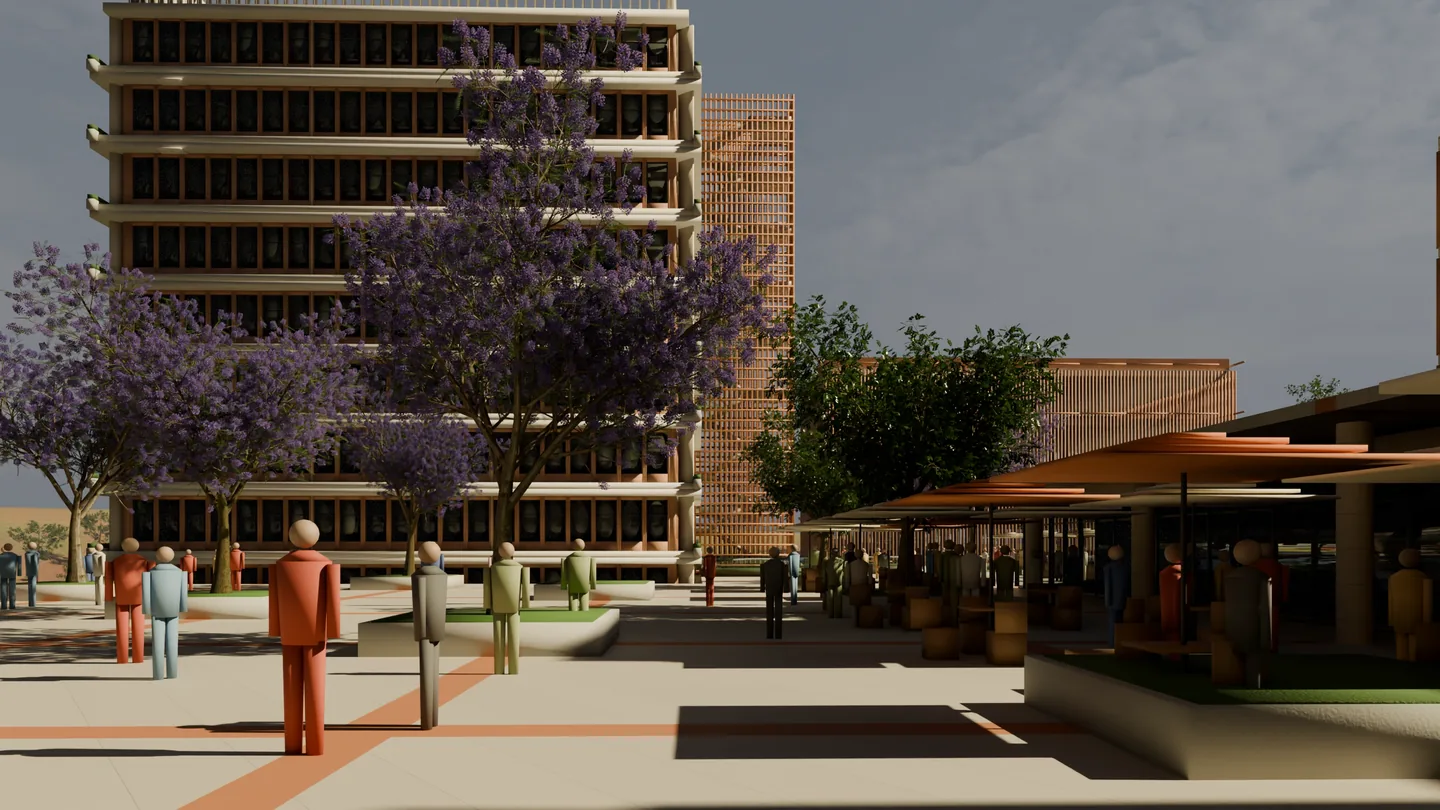
Qaus illustrates the architectural and environmental-study application of this service. Aviation, medical, industrial and other bespoke applications use the same broader combination of software, simulation and visualization capabilities tailored to their own requirements.
Qaus · Concept project
walkthrough film
sample MEP sheets
360° views
simulation clips
Clarify the problem, assess requirements and define a practical scope before committing to the full build.
1-2 weeksDeliver an agreed application, website, film or visualization package against defined deliverables and review stages.
Set in the quoteAI creates value when the model, workflow and delivery method fit the business need. Our service approach brings together AI-assisted development, language and multimodal models, voice technology, generative production and private deployment options. The technology selection is guided by the task, available data, integration requirements and quality expected from the result.
The ecosystem below identifies relevant technologies for project selection and integration. It is not a declaration that every listed platform is currently deployed by UnboxedAI. Final choices are defined within each engagement. Logos identify technologies only and remain the property of their owners. No partnership, certification or endorsement is implied.
Cinema 4D, Redshift, Adobe After Effects, Premiere Pro, DaVinci Resolve, Substance tools and CAD/BIM applications can complement the AI ecosystem where relevant.
Explore integrated capabilities within our six core services, from brand and launch communication to interactive experiences, digital engineering, voice and simulation.
Develop a clear identity, practical brand guidance and launch assets that connect the product to its market.
Create browser experiences, playable concepts and interactive product demonstrations around a defined audience and purpose.
Support communication through voice-over, transcription, subtitles and dubbing. Language coverage and review are established for the brief.
Yes. The service covers aviation, medical, industrial, operational and bespoke scenarios. The objectives, users, hardware and model fidelity are defined for each project.
Yes. A project can connect a real-time environment with analytical models, operational data and instructor or review tools where the brief requires them.
Tell us what you want to improve, build, test or launch. We will help identify the requirements and a suitable starting point.
Discuss a simulation or engineering project