AI dubbing
Redub
Every actor keeps their own voice.
Redub takes a scene into another language. It finds who speaks each line, samples a voice for every actor from their own lines, adapts the script to fit the time on screen, and mixes the new dialogue under the original music and effects.
Redub screens
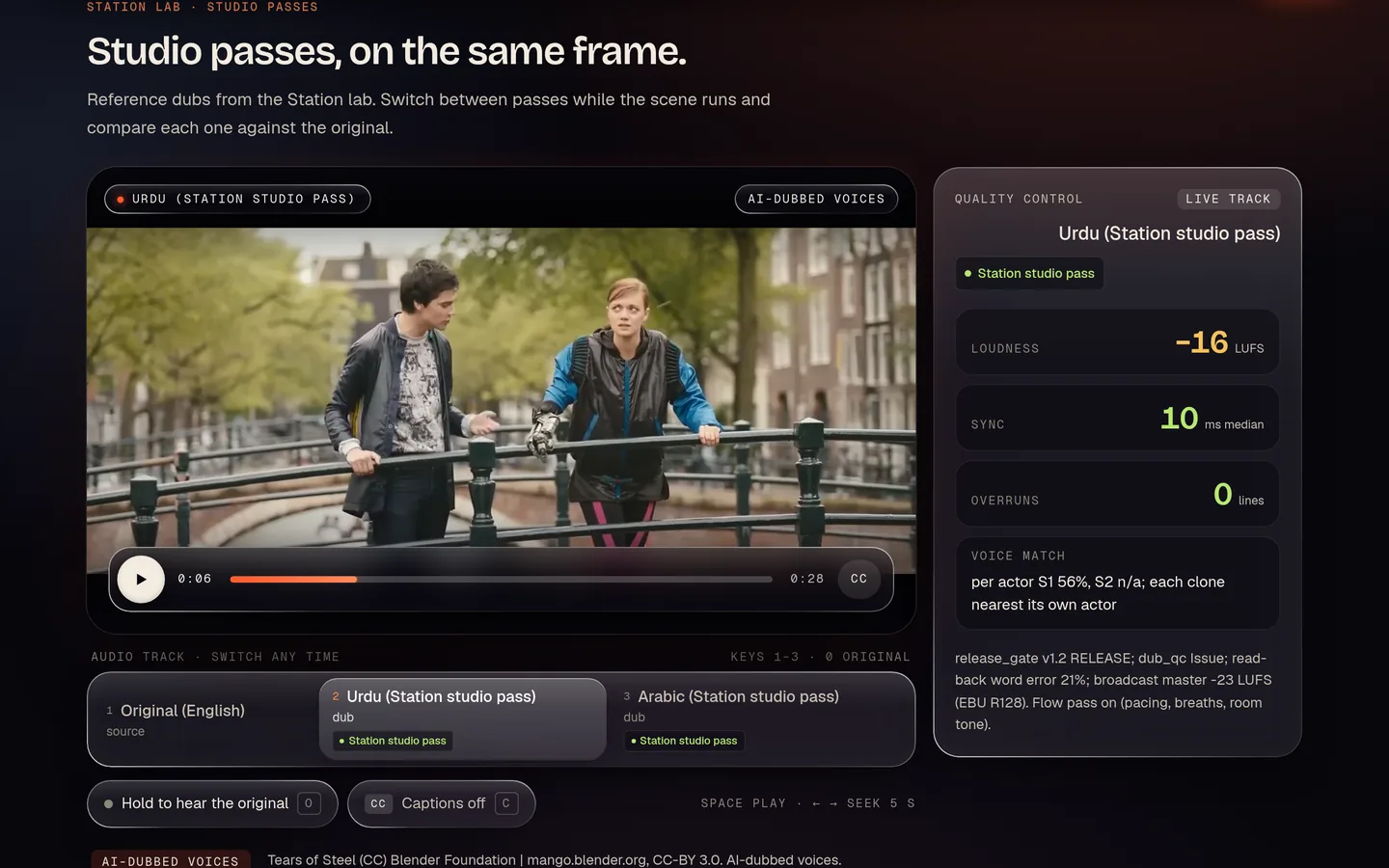
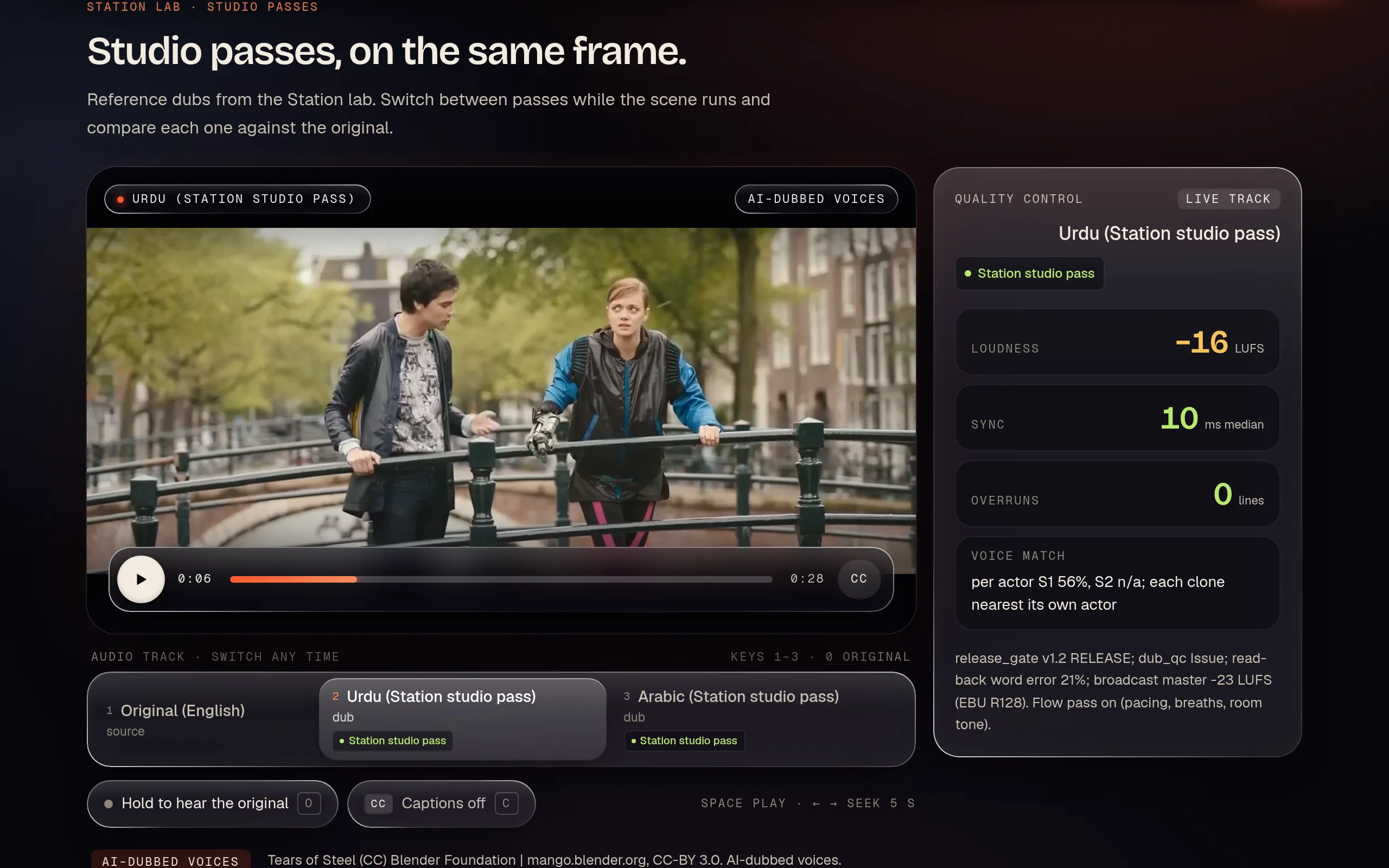
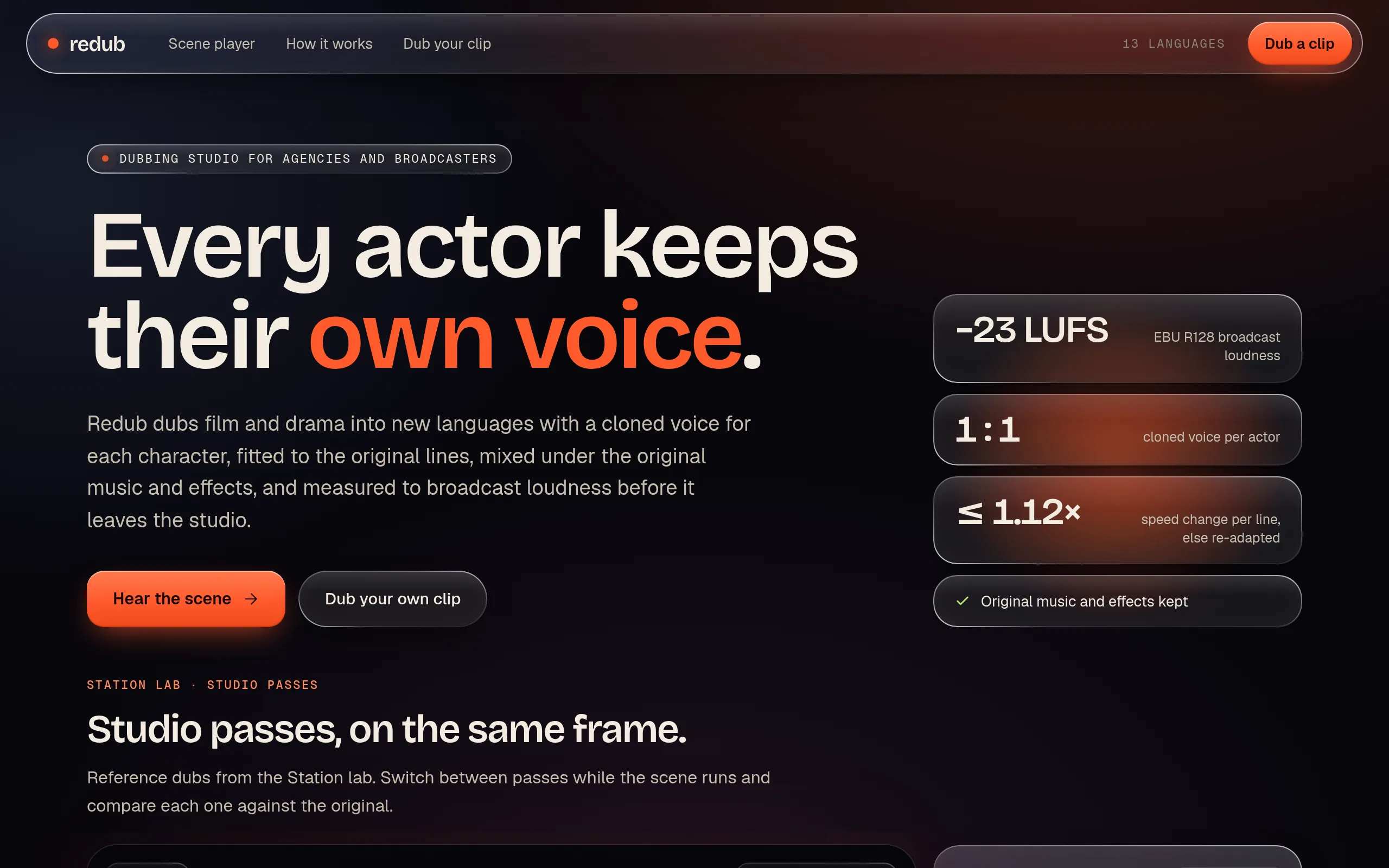
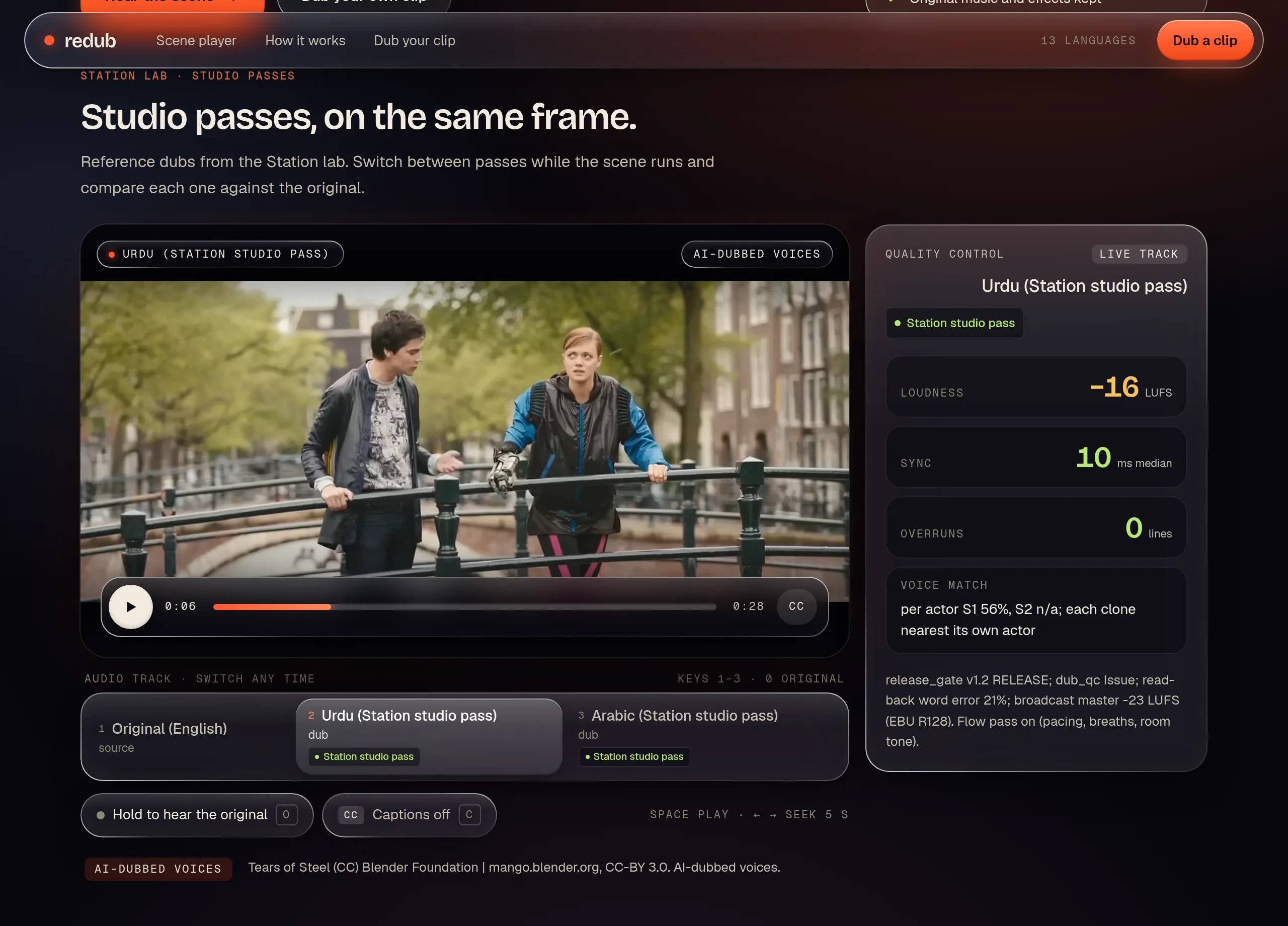
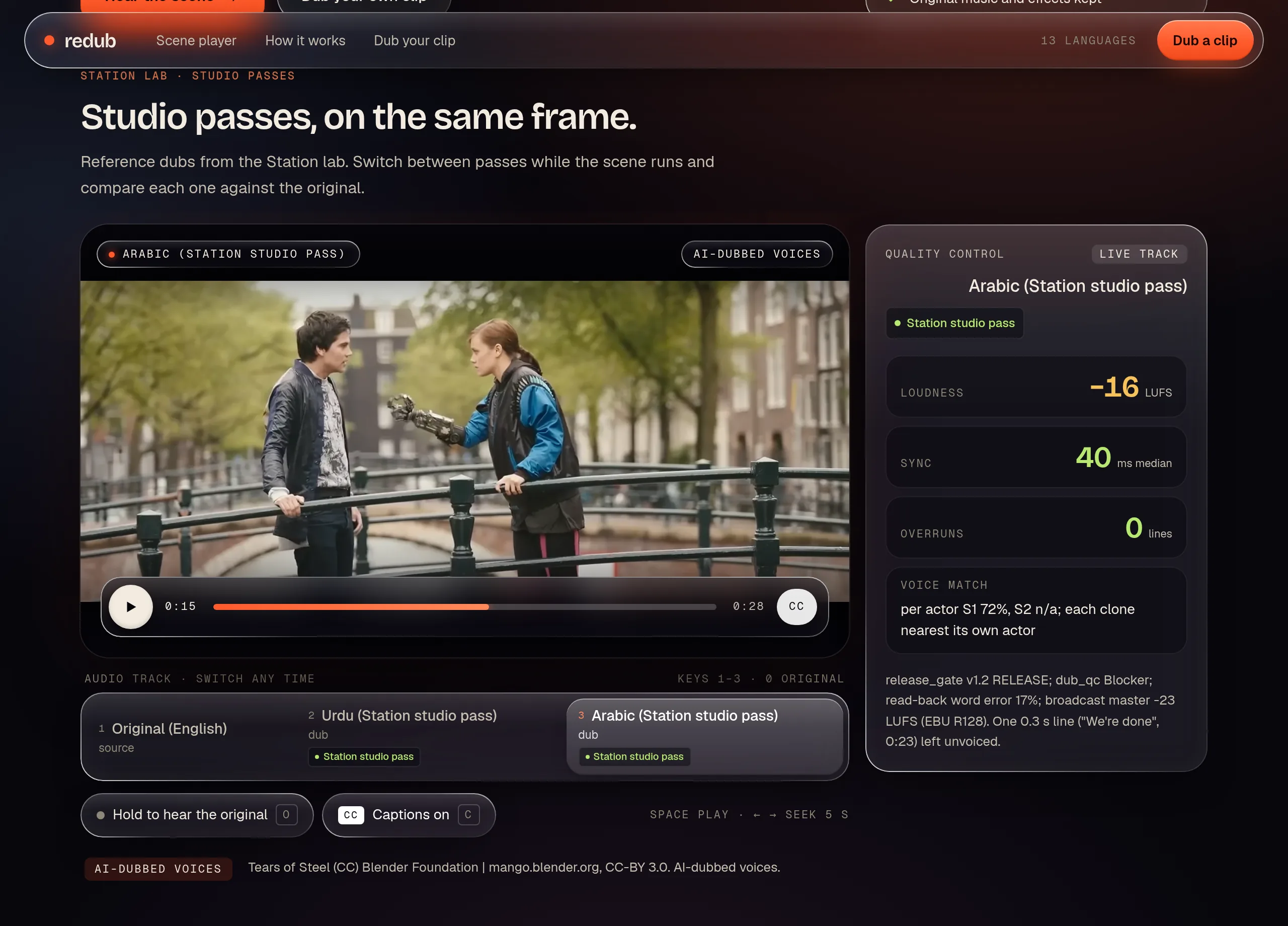
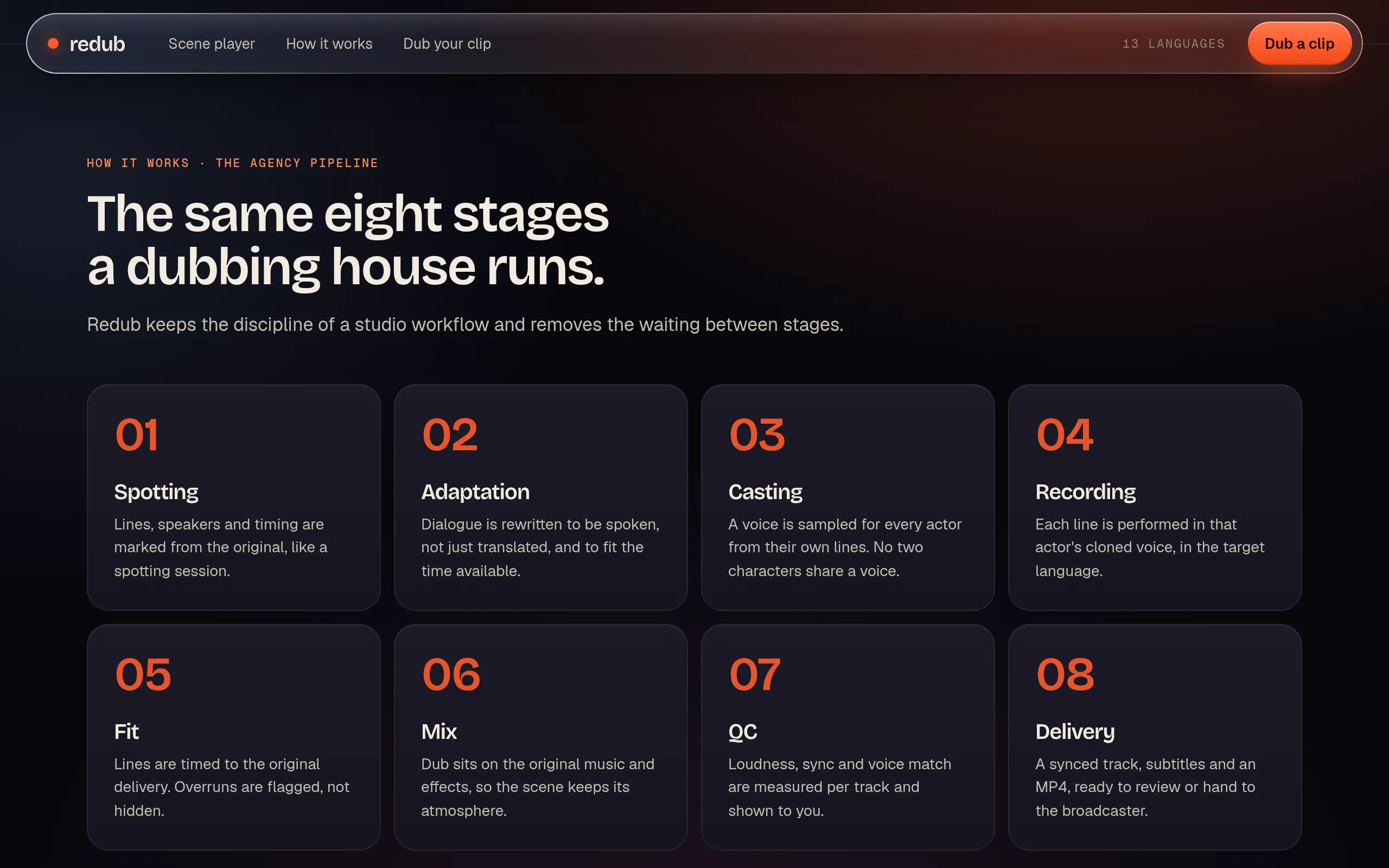
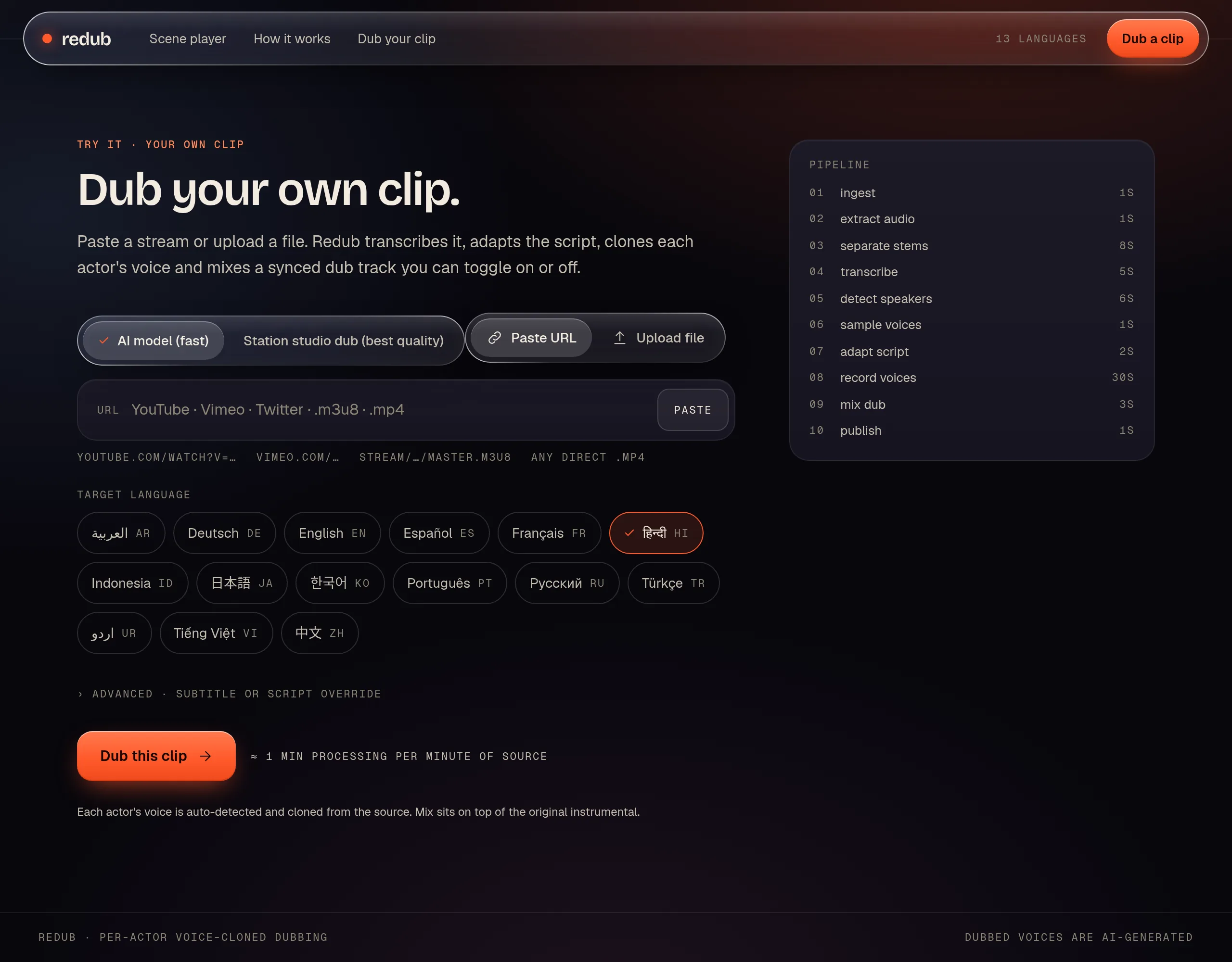
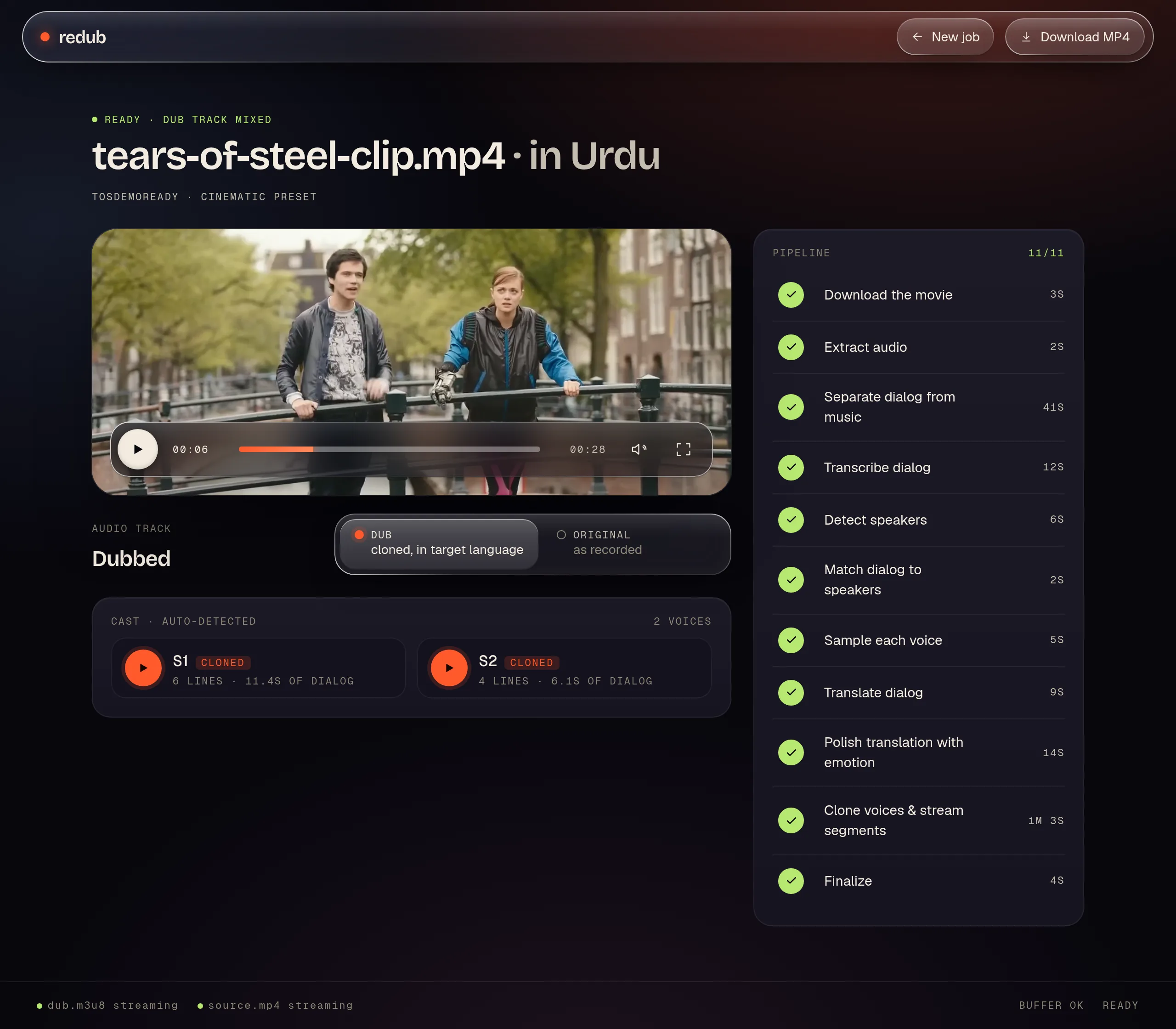
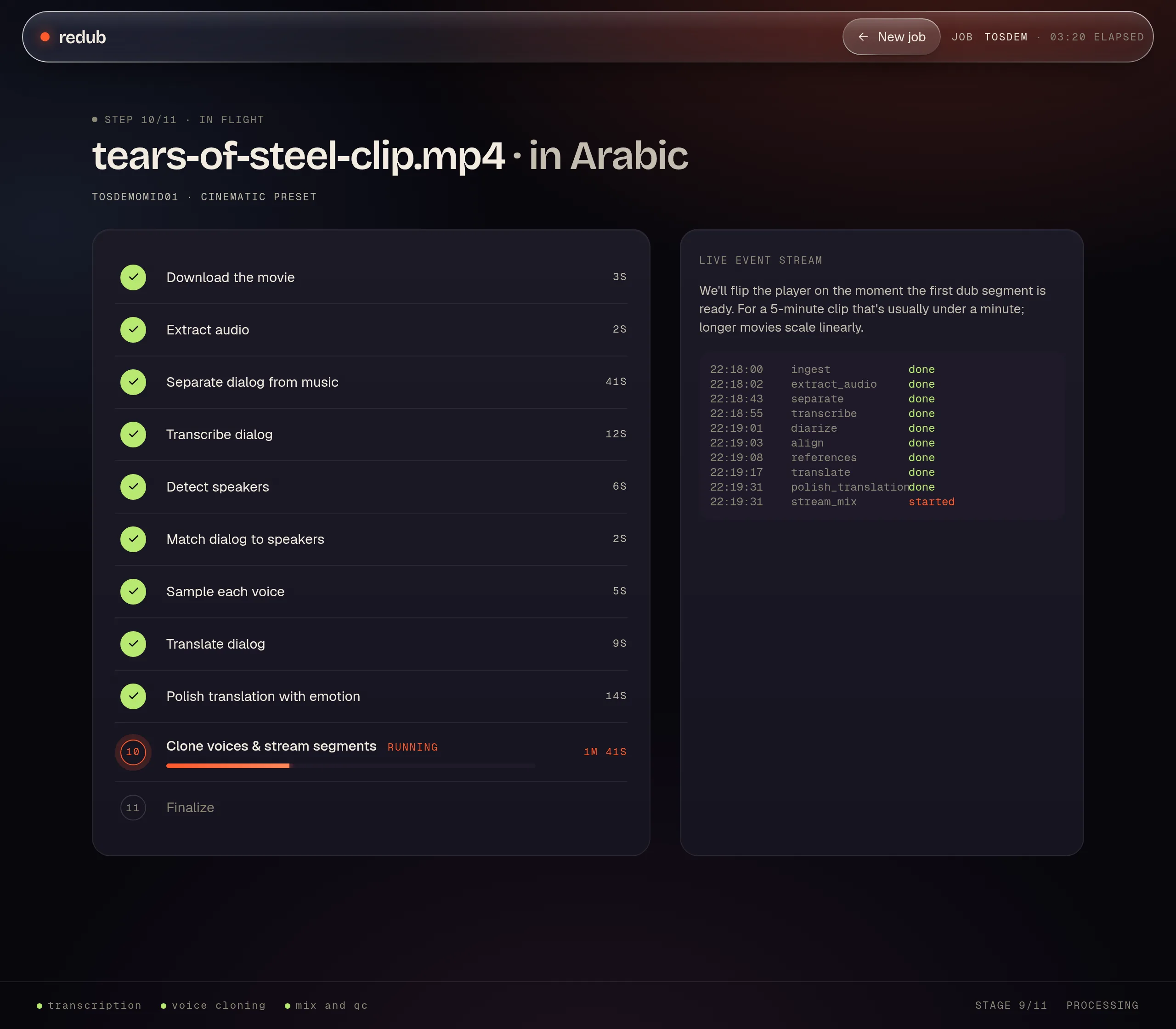
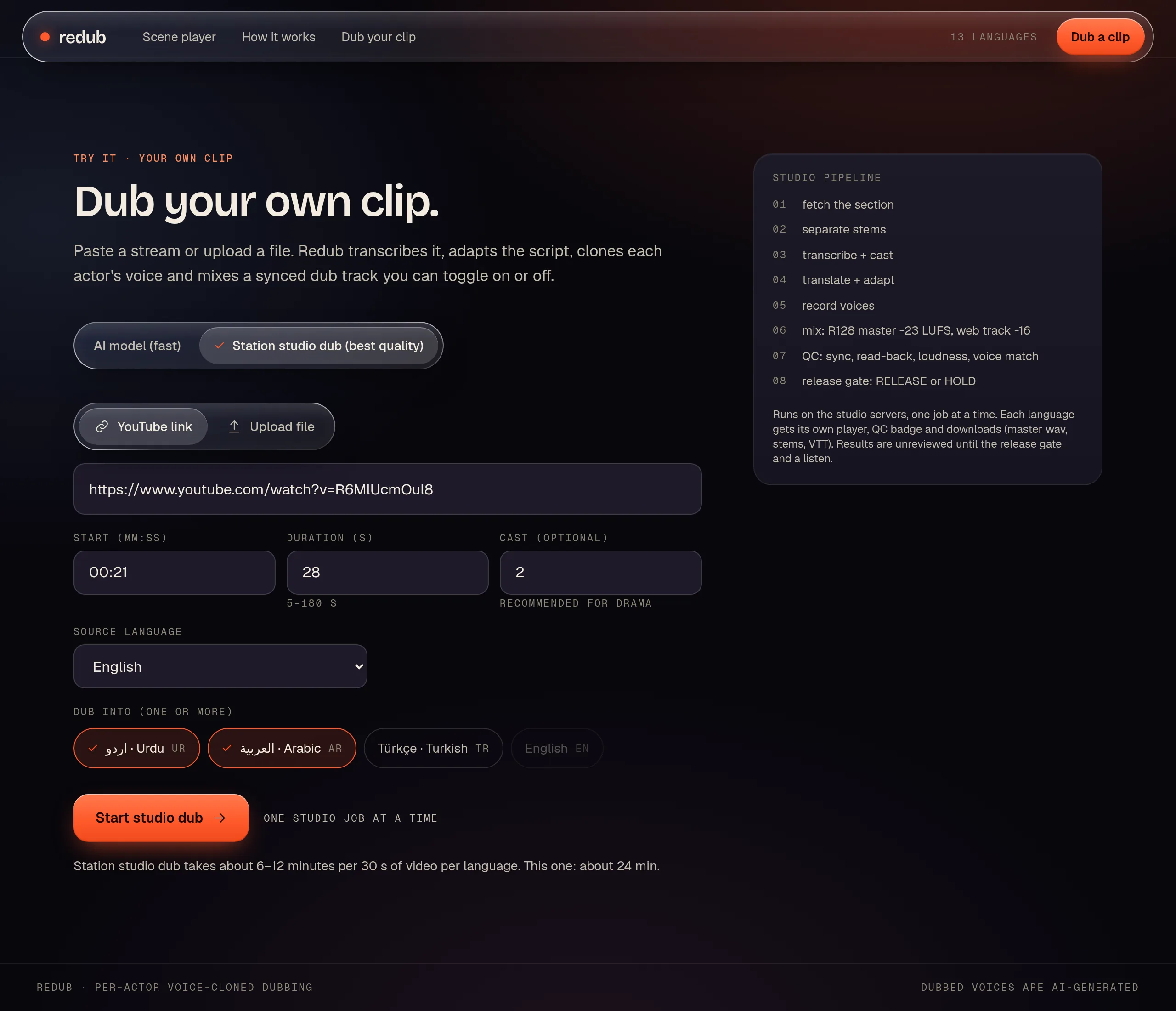
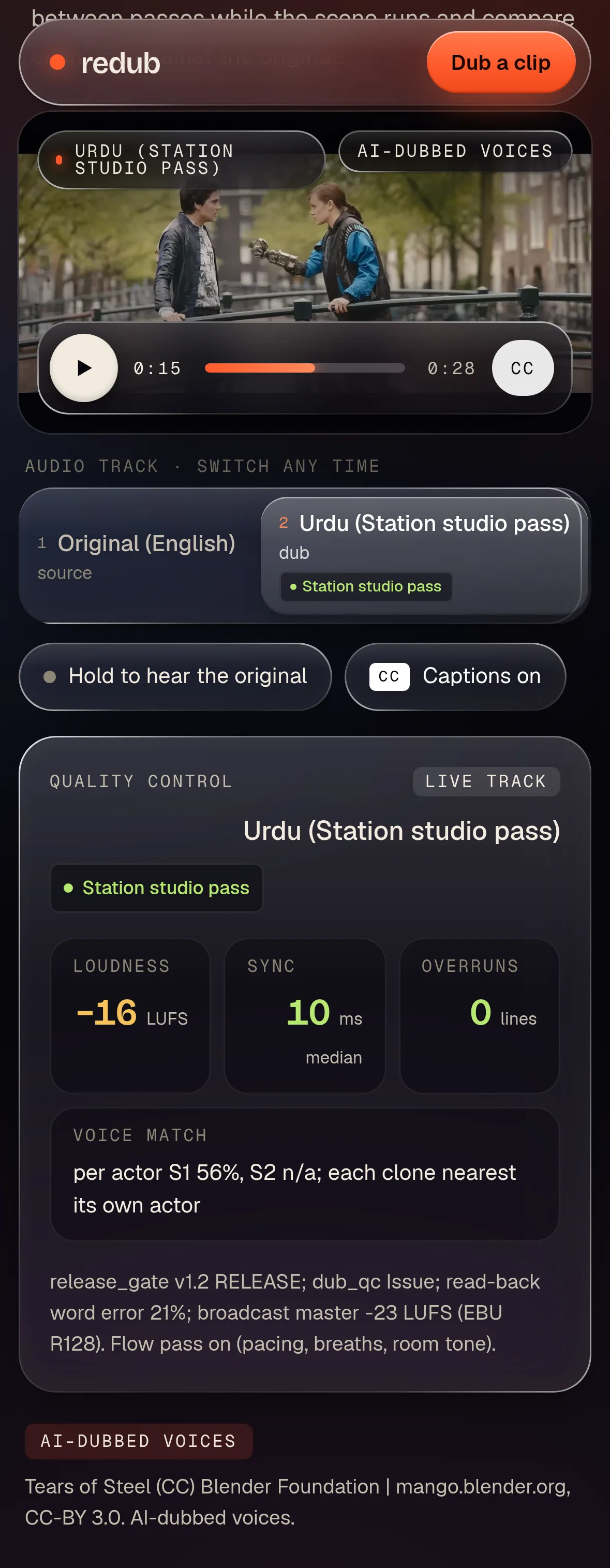
Real Redub screens on demo jobs. Film: Tears of Steel (CC) Blender Foundation, mango.blender.org, CC-BY 3.0. Dubbed voices are AI-generated.
- Built for
- Film, Drama and Broadcast Media
- Status
- demoDemo
- Runs on
- WebUses AI: Yes
- Built with
- Next.js, React, TypeScript, Python, ffmpeg
Video
Redub: one scene, two new languages
Overview
Operational context
A dubbed scene usually means a script adaptation, a casting session, a recording booth and a mix, one language at a time. Redub runs the same stages on one clip: spotting, adaptation, casting, recording, fit, mix and checks, and shows what it measured before anyone listens.
What it covers
Capabilities
A cloned voice for every actor, sampled from that actor's own lines.
Script adaptation that fits each line to the time on screen.
The dub mixed under the original music and effects.
One picture with an Original and Dub switch, subtitles and an MP4.
10 features
Features
Paste a stream link or upload a video file.
Choose the target language; supply your own subtitles or script to skip transcription.
Dialogue separated from music and effects, so the scene keeps its sound.
Speaker detection, with the cast size set by you when you know it.
One voice per actor, sampled from that actor's own lines; minor characters keep their own voice too.
Adaptation, not word for word
a line that runs long is rewritten shorter.
Watch while it renders
the dub plays as it is made.
The cast board
every detected actor with their lines and a sample of their voice.
A quality panel per track
loudness, sync, overruns and voice match.
Studio mode for the best pass
several languages from one clip, each checked by a release gate before anyone hears it.
How it works
How the workflow connects
Send a clip, choose the languages, review each track on the original picture, and take the MP4 and subtitles.
Spot
the lines, the speakers and their timing are marked from the original.
Cast
a voice is sampled for every actor from their own lines.
Adapt and record
each line is rewritten to fit and spoken in that actor's voice.
Mix and check
the dub sits on the original music and effects and is measured track by track.
Status
Implementation and status
demoDemo
A working demo of our own dubbing studio, shown on request. Pilots run on our studio pipeline, one clip at a time, and no track is released until it passes the release gate and a listen. Dubbed voices are AI-generated and labelled as such.
The discussion starts with the intended users, existing systems and delivery requirements. Confirm which functions can be demonstrated, what would need adaptation and how access, hosting and support would be arranged for the proposed use.
Built with
- Next.js
- React
- TypeScript
- Python
- ffmpeg
Runs on
Web
Questions buyers ask
What is Redub?
Redub is an AI dubbing demo that takes a scene into another language. It finds who speaks each line and samples a voice for every actor from their own lines. It then mixes the new dialogue under the original music and effects.
Who is Redub for?
Redub is for dubbing houses, production companies and channels that want to test a scene in a new language before a full dub. It is also for teams that localise documentary narration.
How does AI dubbing work in Redub?
Redub spots the lines, speakers and timing, then samples a voice for every actor from their own lines. Each line is rewritten to fit the time on screen and spoken in that actor's voice. The dub is then mixed and measured track by track.
Is Redub ready to use?
Redub is a demo: a working demo of our own dubbing studio, shown on request. Pilots run one clip at a time, and no track is released until it passes the release gate and a listen. Dubbed voices are AI-generated and labelled as such.
Build something like this
Have a scene to take into another language? Send us a short clip.
Request a Redub demo